Profit vs Cash Flow: What Ecommerce Founders Need to Know
If you run an ecommerce business, there’s a moment most founders experience sooner or later:
“We’re profitable — so why does it feel so tight?”
Sales are coming in.
The P&L looks healthy.
But the bank balance tells a different story.
That gap is almost always caused by misunderstanding profit vs cash flow.
Profit and cash flow are not the same thing
They answer two very different questions.
Profit asks: Is this business working in theory?
Cash flow asks: Can this business survive in reality?
Both matter — but confusing them is one of the most common (and expensive) mistakes ecommerce founders make.
What profit actually tells you
Profit lives on your P&L.
It’s shaped by:
Revenue recognition
Accruals
Cost allocation
Accounting rules
Profit is useful because it shows whether your business model makes sense over time.
But it doesn’t tell you when money actually leaves or enters your bank account.
That timing difference is everything.
What cash flow actually tells you
Cash flow is simple and unforgiving.
It reflects:
When customers pay you
When you pay suppliers
When you buy inventory
When VAT, tax, or loan repayments leave the account
Cash flow decides:
Whether you can place the next stock order
Whether you can increase ad spend
Whether you can sleep at night
You can’t negotiate with it.
Why ecommerce founders get caught out
Ecommerce exaggerates the gap between profit and cash.
Here’s how it usually happens:
Inventory comes first, revenue comes later
You often pay for stock weeks or months before it sells.
On the P&L, costs are spread nicely.
In the bank, cash leaves immediately.
Marketing spend is front-loaded
Ad platforms take cash today.
Revenue arrives later — and sometimes not at all.
Profit can look fine while cash quietly drains.
VAT distorts reality (especially in the UK)
VAT collected today often isn’t owed until later.
That makes your bank balance look healthier than it really is — until the payment is due.
Growth amplifies the problem
As revenue grows:
Inventory orders get larger
Ad spend increases
Cash needs rise faster than profit
This is why many ecommerce businesses feel more stressed as they grow, not less.
Why Xero can say “fine” while cash feels tight
This is where founders get confused.
Xero is doing its job:
Reporting profit accurately
Following accounting rules
Your bank account is also doing its job:
Reflecting reality
They’re not contradicting each other — they’re answering different questions.
The mistake is relying on one while ignoring the other.
The rule of thumb ecommerce founders should remember
If you only track profit, you’ll feel confident right up until you shouldn’t.
Founders who track both profit and cash flow:
See problems earlier
Make calmer decisions
Avoid forced outcomes
This isn’t about becoming an accountant.
It’s about seeing the business clearly.
How this fits into the bigger picture
Understanding profit vs cash flow is one piece of a larger challenge: financial forecasting for ecommerce founders.
Cash, runway, and scenarios all build on this distinction.
We explain how it fits together — without spreadsheets or finance jargon — in our main guide:
👉 Financial Forecasting for Ecommerce Founders (UK Guide)
Final thought
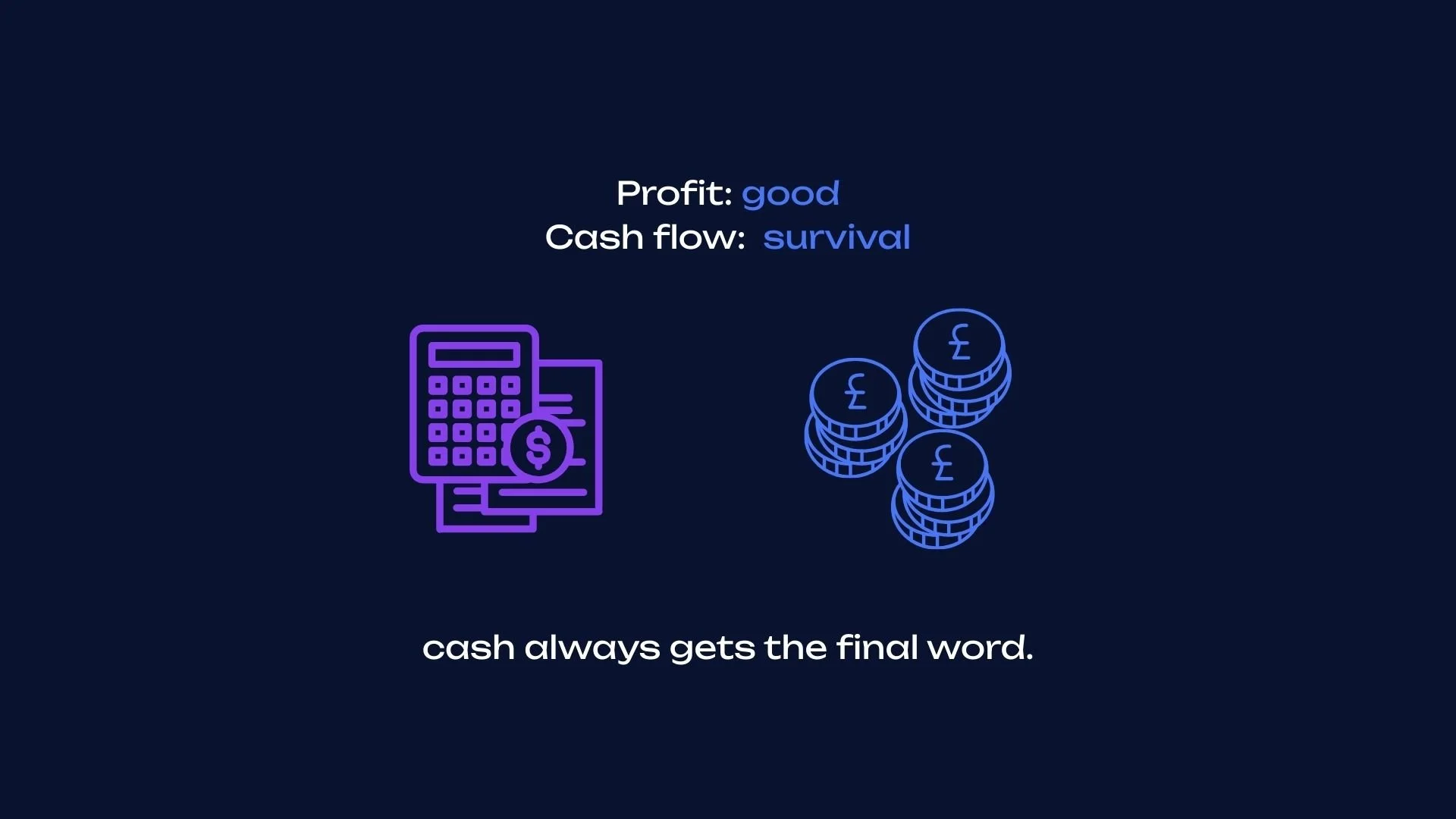
Profit tells you whether the business is good.
Cash flow tells you whether the business survives.
Ecommerce founders need both — but cash always gets the final word.
If you want to see how profit, cash flow, and runway interact in your own business — without fragile spreadsheets — that’s exactly the gap tools like FuturesAI are designed to fill.